New Changemakers
join the changemaking celebration
  • About
  • Speaking
  • Resources
  • Contact
April 4, 2017

Wake Up: Learning to Care About Earth

Waking up to the discovery of a world at risk: Earth Day 1970

“Get this garbage out the lobby now,” shouted the manager of the Kahalui Motel.  It was April 22, 1970.  Ed Yamamoto, student body president of Maui Community College and 12 other students had just stacked the last of 60 huge black bags of trash in the lobby of the motel, ignoring the shouting of the motel manager.  They had just collected this trash from an enormous mountain of garbage that motel staff had put out on the beach two hours earlier for the ocean to take away, which staff did every week.

The students didn’t respond to hours of shouting as the manager railed at them.  Finally, after 7 hours of a standoff the manager caved into the students protesting promising to have garbage picked up in the future by the local garbage service.

Remembering unawareness

As we celebrate Earth Day, this April 22, it is essential to understand that there was virtually no awareness in 1970 that we were facing any environmental challenges in the future.  What motivated these students in 1970, who had never been a part of any protest before, to become environmental activists?

Believe it or not, in 1970 virtually no one was aware that our planet was facing environmental challenges.  So when Dr. James Dator from the University of Hawaii presented us a very daunting range of environmental crises, everything from dangerously polluted air and water to disappearing forests, it arrested our attention.

What the movement meant for me

This wake-up call also motivated me to move to Seattle and pursue a doctorate at UW.  I wanted to join those young activists who were seeking to address some of the daunting new challenges facing a people and a planet as we raced towards the 21st century.

In 1981 I wrote a book encouraging Christians  to wake up to the new challenges that were likely to face us as we headed towards the nineties from widening gap between rich and poor and our need to dramatically reduce our pollution  of air and water titled The Mustard Seed Conspiracy.

I wrote a book in 1991 entitled  Wild Hope that directly challenged Christians to join those working to dramatically improve the stewardship of our threatened environment.  I received a very positive response from leaders in both mainline and Catholic churches.  However, it seemed to be a little early  for many evangelicals to engage this important issue.

Honoring Creation

As we look at the escalating environmental challenges we are likely to face 2017 to 2027, it is essential that we start by going back to the Bible and reminding ourselves of God’s loving purposes for both our lives and for God’s world.

Let me start by affirming I am persuaded that that scripture teaches that this world is our home. “We aren’t just passing through!”  The Bible also affirms that that in “Christ, all things will be made new.” In NT Wright’s book, Surprised By Hope, and a number of his other books as well as those of other authors.   Wright makes a convincing case that the scripture teaches we that our great Easter Homecoming will not to be in the clouds.  Rather he states we will come home as to a new heaven and a new earth where all things are made new.

We will come home to a restored creation in which healing finally comes to the broken, justice to the poor, peace to the nations and God’s good creation will also be restored not vaporized.  Listen to the powerful imagery of the prophet Isaiah.

“The desert and the parched land will be glad;
the wilderness will rejoice and blossom.
Like the crocus, 2 it will burst into bloom;
it will rejoice greatly and shout for joy.
The glory of Lebanon will be given to it,
the splendor of Carmel and Sharon;
they will see the glory of the Lord,
the splendor of our God.

3 Strengthen the feeble hands,
steady the knees that give way;
4 say to those with fearful hearts,
“Be strong, do not fear;
your God will come,
he will come with vengeance;
with divine retribution
he will come to save you.”

5 Then will the eyes of the blind be opened
and the ears of the deaf unstopped.
6 Then will the lame leap like a deer,
and the mute tongue shout for joy.
Water will gush forth in the wilderness
and streams in the desert.
7 The burning sand will become a pool,
the thirsty ground bubbling springs.
In the haunts where jackals once lay,
grass and reeds and papyrus will grow.”

Isaiah 35:1-7, NIV

Clearly, God’s purposes are not just the restoration of our personal lives. The creator God does intend to make all things new including this good creation. Therefore working for the care of God’s good creation is not just the agenda for those on the political left. All of us who are followers of Jesus Christ need to make God’s loving purposes for a people and a world our purposes, don’t we?

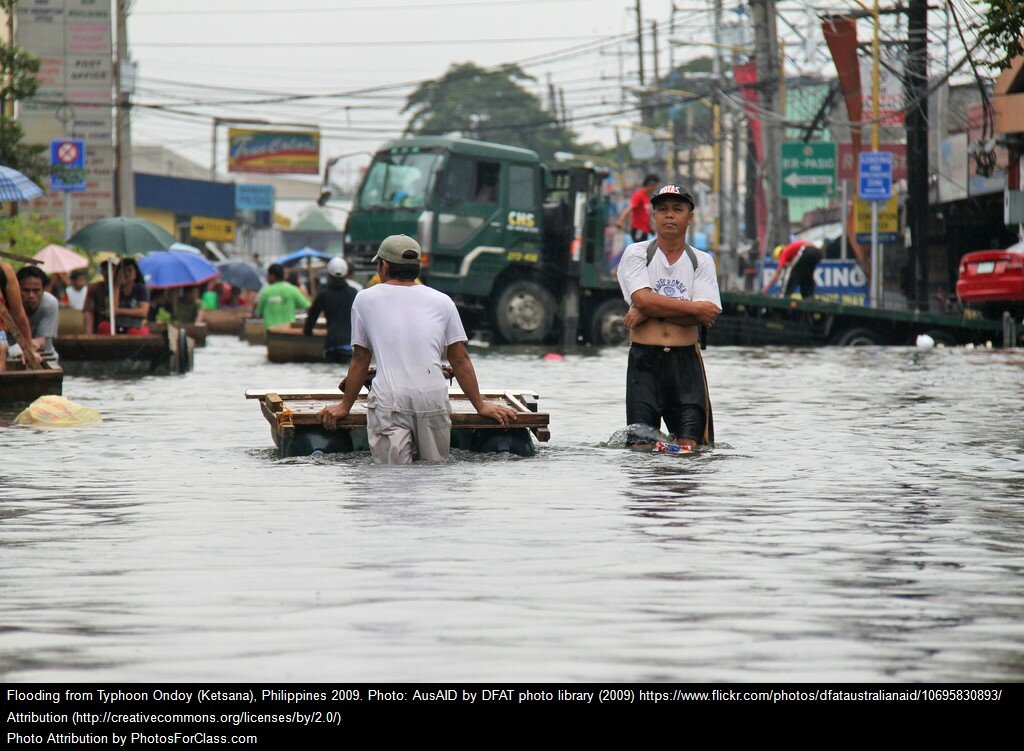
Now as we prepare to celebrate Earth Day on April 22, 2017 we need a wake-up call.  The future of God’s good creation is much worse than we ever could have imagined in our worst nightmares on that first Earth Day in 1970.  Reefs are dying, glaciers are melting, arable farm lands are rapidly declining and which is causing growing famines right now that are threatening the lives of millions of our neighbors in Africa.

On April 22, 2017 it is estimated that almost a billion of us from 192 nations will join together to not only celebrate Earth Day but to explore how we all can dramatically increase investment our environmental renewal caring for God’s good creation.  I encourage all of us to not only join the celebration but to also join a new generation of change makers and creation care activists planting gardens, empowering those at the margins and advocating for environmental justice.

Join a new generation who live like they give a damn!

I find one of the greatest reasons to be hopeful is that God seems to be raising up a new generation many of whom are more thoughtful about every aspect of their lives in terms of environmental stewardship in terms of the clothes they buy and the food they consume.  They are also much more active personally and politically in working to find ways to improve our endangered island home.

Today millennials , 18 to 35 year olds, are even more involved in working for both environmental renewal and economic justice than the young activists on Maui in the 70s. Since millennials are the first digital generation they are much more aware of issues of environmental, economic and racial justice.  More importantly they are not only more aware a higher percentage of them want to use their lives for serious change making.

Atlanta Harvest

For example, Bethaney Harrington, as a college student at Emory University, was invited to imagine a whole new way to enable her church to create a more sustainable future in Atlanta. She and her fellow students were members of an Intervarsity team creating new forms of urban empowerment.  They created a new urban innovation called Atlanta Harvest.

Essentially they created an urban farm project on some abandoned land just three miles from downtown instead of importing produce from farms a hundred mile away.  Consumers in this area of Atlanta buy locally grown vegetables which reduces the amount of fuel used to transport the from many miles away.  They were also able to provide fresh produce for those at the margins who often could not afford it.

The V3 movement, drawing on some of the ideas from The New Parish, are encouraging new church plants to become more involved in creating more sustainable local communities.  Sean and Julie Hall an example of church planter who are leading this parade.   They are planting a church called the Fountain Parish in Bellingham Washington which is one of the most sustainable cities on the west coast.  They are also planting in a low income neighborhood.  Instead of starting a food bank for they invited their neighbors to join them in a community venture of planting vegetable gardens in everyone’s back yard that wants to participate.

Pro-environmental, Pro-family

In April 2017 our small planet is much more at risk that it was on that first Earth Day.  Our reefs are  dying, the climate is warming and frankly the future for our children and grand children is increasingly in peril.

To make matters much worse the current administration in the US has slashed funding for the EPA environmental renewal by 31%. as well as undermining a growing range of environmental programs to restore air, water and land.  They have also just reversed the commitment to reduce carbon emissions. It also Looks like the US is going to pull out the Paris Environmental Accord with 200 other nations which would dramatically undermine our global efforts to improve our  environment while there is still time.

As a consequence not only the future of the planet but the future of our children and grandchildren as well as families all over the planet will be in growing peril in the next two decade unless we reverse these serious cutbacks.  This not only a pro-environmental, pro-justice issue. It is also a pro -family and a pro-life issue for all followers of Jesus.  I recommend Making Peace With the Land by Norman Wirzba.  He enables us in this book to grasp how vitally our biblical faith connects to our care of God’s creation.

Do you have an interest in this conversation? I’d love to hear your insight! Email me at: [email protected]
Wake Up: Learning to Care About Earth
March 20, 2017

Death Tsuanmi: Church Decline in the Millenial World

In this 12 month series we are inviting both church leaders and church planters to learn to lead with foresight and imagination in the radical way of the servant Jesus.  We will share with you examples of those who are already imagining and creating new forms of change-making, life-making and church-making.

Examples of past action

In my first two posts in 2017 I have shared two examples of how of millennial leaders have not only learned to anticipate a new opportunities but also create new innovative forms of change-making to respond to urgent social challenges where they live.

The very good news, that I celebrate in Live Like You Give A Damn! Join the Change-making Celebration, is that since the millennial generation is the first digital generation, they are much more aware and concerned about issues of economic, racial and environmental justice.  The even better news is that more of them want to invest their lives in serious change-making than earlier generations.

That is why a number of corporations are adding a social mission to their businesses to attract and hire millennials. That is also why my first two posts in 2017 are about millennials who are showing all of our churches how to shift from offering token handouts to those in need to creating new forms of serious change-making that enables them to become more self reliant.

In my January post you met Leah Driscoll who discovered that the Twin Cities where she lives is experiencing a growing “food desert” of almost 300,000 people.  Remember she and her team responded by creating a new social enterprise called Mobile Markets.  They are launching a fleet of old municipal buses that have been transformed into mobile markets to respond to this growing challenge to make reasonably priced food available.

In February you met Jensen Roll, who is a social entrepreneur, concerned by the accelerating costs of housing for the working poor.  Remember that he and his friends are working to create a Tiny House Village of 50 units in Burlington, North Carolina?

In this post I want to shift from innovative change-making to  issue a wake-up call to both church leaders and church planters.  I want to urge readers to wake up not only to the accelerating needs of our neighbors locally and globally.  However, I also want to sound an urgent wake-up call to the accelerating decline of the church in the United States, in large part because the alarmingly rapid rate at which we are losing those under 35 from so many of our churches.

An aging church and the ‘Death Tsunami’

For a number of years I have enjoyed working with and learning from a number of denominational executives in the US, Canada, Britain and Australia as I have worked as a consultant to anticipate change in both our societies and our churches.  In the early 90’s I gave the leaders in the American Baptist Church the welcome news that they would be the first mainline denomination to become richly multicultural.  Within a decade that forecast became a reality.

Today I don’t have a lot of good news to bring to the Western church or the church in the US.  I also remember in the early 90’s that many evangelicals sincerely believed that the graying and declining denominations would only afflict those in mainline denominations. Today even the Southern Baptist Church is getting a serious taste of graying and declining in a growing number of their congregations.

As we race towards 2027 mainline churches are graying and declining at a concerning rate of 2% to 5%. However, this rate is not constant.  Since so many members are in the 60 to 90 age range this rate of change  is likely to suddenly accelerate in what one Methodist leader calls a “death Tsunami.”

As I mentioned a growing number of evangelical churches are also graying and declining.  For many years regular church attendance hovered around 40%.  Today the best research I can locate places it closer to 17% and starting to more rapidly decline.

The Millennial question

One of the most alarming trends is the projected rate at which growing  number of millennials (18 to 35) are disaffiliating from the church according to Pew Research.  I suspect we may have a decade to turn this big ship around or otherwise experience a sharp decline.

I am not only concerned about graying and declining churches I am also increasingly concerned, as I am sure many readers are, with the significant reduction in time and resources that American churches are able to invest in local and global efforts in community empowerment.

And yet millennials are much more active seeking to improve the lot of their most vulnerable neighbors. As a consequence a number of millennials tell me they aren’t inclined to join an organization where 75% to 90% of the time and money is expended on those “under the tent.”

Is it possible our congregations could begin to develop a more compassionate focus by spending more time with our young people?  Through those relationships, we could begin to share their concern for others, and we could reintegrate them into the family.  Some churches could actually start running social enterprise competitions like Colonial Church incubator which enabled Leah Driscoll to launch a mobile market nearly a dozen other social enterprises.

I am very impressed by the church planting of the Evangelical Covenant Church in America.  They do more to intentionally create churches that are much more outwardly focused than any other denominational church planting effort I have come across.  First, even though the roots of the Covenant Church are from Sweden half of all their new church plants are multicultural because they want to share life and faith with all of God’s people and prepare for our richly multicultural future.

All of these new Covenant church plants seek to be more authentically mission-oriented by deliberately reducing the amount of time and money they spend on “the gathered” so they are able to invest more in local and global initiatives. For example, Tim Morey has planted 10 churches in as many years.  He is now pastor of New Life Covenant in Torrance, California.

The last I talked with Tim, he told me that through hard work their church plant they have been able to free-up 30% of their time and money to invest in local and both global initiatives. One way they do this is to keep their overhead costs at a minimum.  These Covenant plants intentionally operate by restricting their gathering times to weekly worship in a rented facility and small missional home groups that primarily focus on how to make difference in the lives of their neighbors and neighborhoods that I suspect would appeal to many millennials.

Is it possible for both established churches and new church plants to no longer call themselves “missional” unless they set real goals for 2017 to 2022 significantly increase the amount of time and money our congregations and members invest in serious change-making? Is it possible they could also take the radical step of not only inviting the creative ideas for social innovations from not only the young that are still in the building but also those in the neighborhood?


*This blog was originally featured as a post for the V3movment. 

February 22, 2017

Change is Happening at Warp Speed. Can Your Church Join In?

In my recent blog post I encouraged readers to prepare for “change and opportunity.” In the next 10 blog posts in 2017 I will invite you to join an unusual group of innovators who are imagining and creating a range of new ways to live and engage some of tomorrow’s challenges and create new forms of church.

These innovators are inviting all of us to become more serious followers of Jesus by joining them in creating: new forms of lifemaking, changemaking and churchmaking that both engage some of tomorrow’s new opportunities in ways that also more fully reflects the radical way of the servant Jesus.

Welcome to a decade of 2017 to 2027… changing at warp speed!

In January I mentioned Tom Friedman’s new book, Thank You For Being Late: An Optimistic Guide to Thriving in An Age of Accelerations.  He argues convincingly, that the rate of change seems to be accelerating.  He suggests that three of the forces causing this acceleration are:

  1. the explosive development of new forms of technology
  2. the rapid globalization of the planet
  3. the growing threat of climate change irrevocably threatening the well being of life on this planet.

I want to add a 4th.

We are also witnessing a growing wave of nationalism and populism that is sweeping through Europe destabilizing governments and relationships to other countries.

When I was speaking at the New Parish Conference in the UK in November I found that the British vote to leave the European Union is dividing both the society and the church. Since our presidential election in the US, we too are being impacted by this volatile movement. I suspect this movement is also accelerating the rate of change and political turbulence in other countries all over the planet.

e have a choice.  We can allow this growing list of challenges to discourage us or we can view them as opportunities to imagine and create innovative new responses…that not only brings real change but a rising tide of hope as well!

A New Generation of Innovators

Welcome to a new generation of innovators who are creating new responses to new challenges and opportunity!

In each of these 10 posts for 2017 I will invite readers to join those who seek to create new forms of “lifemaking” to ignite their imaginations to create ways of living. Below, I’ll introduce you to Jensen Roll an inspiring innovator we can all learn from.

We will also share new forms of “changemaking”, to move beyond handouts, to working with neighbors by creating, not only new housing models, but also starting new social enterprises that provide our neighbors people a living wage.

Finally, we will also feature new forms of churchmaking that aren’t just focused on the needs of the gathered but increasingly learning how to become churches for others… devoted to serious changemaking with our neighbors… always throwing better parties.

A Future Challenge

The growing housing crisis in the coming decade for the poor, middle class and young innovators

Let’s start by looking at the challenge, in this coming decade, of the growing housing crisis facing the working poor, the middle class and increasingly the young….including young church planters, social entrepreneurs and under 35 innovators.

I find very few people over 50, including church leaders, recognize how drastically the housing market has changed for the under 35.  This is particularly true for those young innovators who want to invest their lives in serious change making.

In Live Like You Give A Damn! Join the Changemaking Celebration I celebrate the welcome news that millennials are much more globally aware since they are the first digital generation.  As a consequence they are much more aware of issues of economic, racial and environmental justice.

I also celebrate the even better news that a higher percentage of them want to invest their lives in creative new forms of urban empowerment, environmental innovation and planting churches that don’t simply exist for the gathered but for serious neighborhood changemaking as well.

However, millennials are facing the double whammy of the highest school debt ever and the highest housing costs in most markets in the US.  I talked to a young church planter who has no idea how he will ever be able to pay off $90,000 debt for his M Div degree and then purchase the kind of suburban house he was raised in.

Some of these young leaders also tell us it is even harder to imagine a way to enable the working poor in their neighborhood to ever reach the place of buying their own home…given the forecasts that housing prices are likely to rise faster than peoples incomes in the next ten years.

In contrast, I bought my first house in Portland in 1962, a newly restored 1920s four bedroom, two bath bungalow with an unfinished basement for $14,000 with $100 a month payments. Even though my salary at a Christian college was barely above a monthly public welfare check I had no problem making the hosing payments.  For my generation the costs of housing was dirt cheap and school debt was virtually unheard of.

Jensen Roll’s Housing Solution

Meet Jensen Roll. He’s a 24 year old creating innovative housing options in an increasingly expensive housing market in these rapidly changing times

Jensen Roll is a friend of mine.  I am fortunate, that as a young social entrepreneur, he often finds time to co-present with me.  Jensen graduated with a degree in Social Enterprise from Elon University last May.  I have enjoyed getting to know Jensen and I am so impressed with his innovative imagination.

Since Jensen wants to invest his life in creating new forms of social enterprise to help empower those at the margins he has been struggling with the cost of housing for himself as he is getting started as a social innovator.

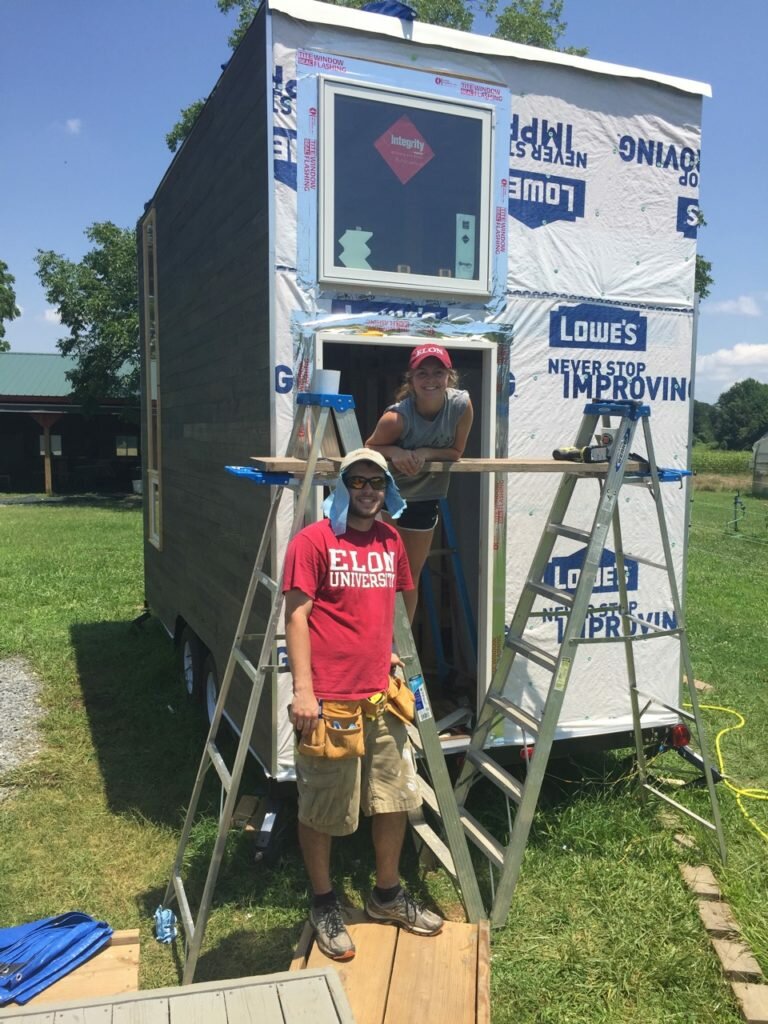
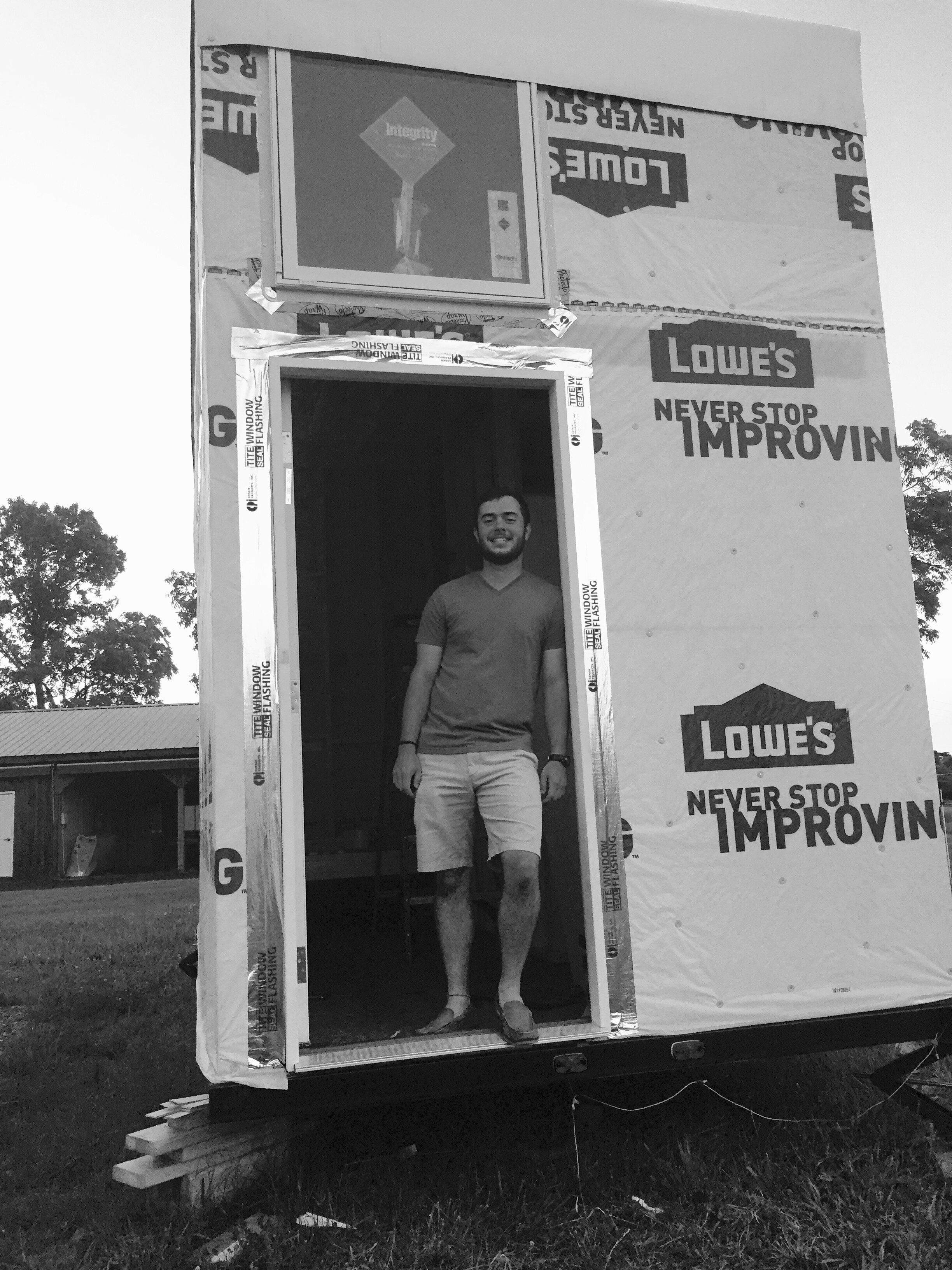
This millennial ignited his imagination and came up with an intriguing idea.  He approached Lowes hardware and persuade them to provide the building materials for him and his friends to construct a tiny House.

During his final semester at Elon University friends at school and church taught him how to weld the bottom frame with wheels on which to build the house. With the materials from Lowes and the help from his friends he was able to build his Tiny House for around $20,000.  He and his bride plan to make their home in this mobile dwelling to reduce their living costs and increase their mobility. It includes a loft bedroom, kitchen, bath and a sitting area.

This experience sparked a new idea for him of how to help those with marginal incomes to also have the possibility of becoming home owners too.  Jensen calls his innovation a Tiny House Village.

Welcome to the Tiny House / Big Village

Jensen has purchased ten acres within walking distance of the downtown of his hometown, Burlington North Carolina. He and his collaborators plan to construct a 50 unit Tiny House Village for low income clients many of whom never expected to be able to own their own home.  It will operate like a co-housing community with a common garden and other forms of cooperation.  Jensen is working with the local leaders in Burlington to fashion land use policies that ensure these tiny houses on skids conform to the local codes.

Jensen’s plan is to build fifty 350 square foot tiny houses with sleeping loft, kitchen, bathroom and sitting room for $50,000 each. If tenants pay their monthly rent for 5 years they will own their own home.

Can you see how even tomorrow’s most daunting challenges are really new opportunities to invite the creator God to ignite our imaginations to create innovative responses.

Your Invitation to Changemaking

I want to hear not only your response to this post but even more importantly to hear your innovative ideas for lifemaking, changemaking and churchmaking.  What are your new ways to engage one of tomorrow’s new opportunities in ways that reflects something of the radical compassion of Jesus…and makes a real difference in the lives of others?

This is your invitation to join this ongoing conversation by sharing with us, and our other readers, your new innovations and your best ideas of how to address some of tomorrow’s new challenges and opportunities of a world changing at warp speed.  This is your invitation to discover the satisfaction of God using our mustard seeds to make a little difference in times like these.

Write us at newchangemakers.com and share the creative ways God is using your mustard seeds to make a little difference in these troubled times.

January 19, 2017

We Must Prepare for Change—and Opportunity

We begin 2017 by racing into a new decade that is likely to change at warp speed.  As a consequence, leaders in our churches need to learn from the business world how to prepare for change and anticipate a host of new challenges before they arrive so that we all have lead time to create new and innovative responses.

One of the gifts of the V3 Blog is the constant invitation for us to join others in creating new, innovative forms of church for changing times. However, as we gallop into the turbulent 2020s, we will also need to be as innovative in creating new forms of both change making and life making if we are to have any hope of engaging the avalanche of new opportunities likely to come our way.

The Age of Accelerations

In times of accelerating human need we and our churches will need to move from resourcing others through handouts to creating new forms of social enterprise and community empowerment that actually enable our most vulnerable neighbors to become more self-reliant.

However, if we and our churches are going to have time to be involved in creating change, we will need to enable one another to create new ways of life making that enable us to free up time to be more present to God and our neighbors. We will need to create much more purpose-focused, compassionate, and creative lives—in the way of Jesus.

In his new book Thank You for Being Late: An Optimist’s Guide to Thriving in the Age of Accelerations, Thomas Friedman explains why the rate of change is accelerating. Friedman asserts the three major forces accelerating change are “technology, globalization and climate change.”

What Happened

Friedman begins by identifying some of the recent tech innovations that are powerfully contributing to this new age of acceleration. Presenting in title the question, “What Happened in 2007?”, Friedman answers: Steve Jobs introduced us to the I-phone, Facebook moved off campus, Twitter appeared, and Amazon released the Kindle. He adds that in 2006 Google bought You Tube, and in 2007 it released Android.

In ten years no one will doubt that the accelerating rate of climate change is putting the future of our children and grandchildren in serious peril. I suspect the political change in the United States will also accelerate the rate of political and economic change in the coming decade not only in the US, but throughout our world.

One of the unexpected changes in the past four years is the rapidly growing refugee crisis. At the end of World War II there were a record 60 million refugees. Today we are facing a global humanitarian crisis with over 65 million refugees searching for a safe place to resettle their families.

Friedman predicts rapid rates of population growth in North Africa and the Middle East are likely to create an even greater refugee crisis in the coming decade.

Live Like You Give a Damn!

In Live Like You Give A Damn! Join the Changemaking Celebration, I argue that we need to take seriously not only the compassion of the millennial generation for our neighbors, but also their ability to imagine and create new forms of social enterprise and empowerment. These things can often make a lasting difference in their lives in ways that church handouts will never accomplish.

Innové in the Twin Cities, for example, sponsors social enterprise competitions. All you need to participate is to be under 35 and have a good idea. A young woman named Leah Driscoll won first place in 2013. Leah was deeply concerned that nearly 300,000 of her neighbors in the Twin Cities lived in a “food desert,” an area where people don’t have access to grocery stores or fresh produce.

Leah and her friends responded by creating the Mobile Market. They bought an old municipal bus and changed it into a mobile grocery store. It travels to different neighborhoods every day offering food at reasonable prices. And it pays for itself. Leah and her team plan to purchase four more busses to enable even more of their neighbors to buy groceries at a reasonable price.

What would happen if churches not only started inviting the change-making ideas of those under 35, but also joined them by creating a range of innovative ways to enable our neighbors to become more self-reliant in light of a future likely to present us with more neighbors in need?

Not only are millennials leading the charge in creating new forms of change making, they are also leading the charge in terms of creating new forms of life making—serious new forms of radical, whole-life discipleship. Church as Movement coauthor Dan White Jr. told me how a new church plant (Axiom) he is leading in Syracuse, New York, is enabling its young members to develop both a rule and rhythm of life which free them to be more present to God and others.

Helen, who is a high school basketball coach, started attending the class at Axiom. She discovered that she needed to cut back on her over-the-top (her words) social life to free up time to be present to three of the players on her team. The three students no longer have parents in their lives, so Helen meets with them weekly to help them make good decisions at this critical time in their development.

We Need Each Other In Order to Prepare for Change

As we race into a future filled with escalating opportunities, business as usual in our lives and congregations will no longer suffice.  We need to join a new generation of change makers who are determined to create their best lives so they can join those on the innovative edge, those who are creating their best neighborhoods in response to a decade changing at warp speed.

Are you ready to Live Like You Give A Damn from 2017 t0 2027?

Are you ready to join this changemaking celebration?


*This post was originally written as a guest post for the V3 Movement Blog, a blog I contribute to monthly. Be sure to check them out! 

December 19, 2016

Sharing Social Innovations in Australia…Join the Changemaking Celebration!

In my last post I interviewed , an Australian living with his wife Anji, two Alpaca’s, three lizards, an assortment of other animals and some 30 people in the Newbigin House in Birmingham in the UK. In my interview, Ash shared the training school in where he plans to prepare a new generation of young people to become social entrepreneurs in some of the tougher neighborhoods in Birmingham.

Christine–my Ausie partner–and I are actually in Australia celebrating Christmas next week with her brothers and their families. When we first arrived we flew to Melbourne to get some time with our good friends Gary and Ev Heard.

On December 5, we met with a great group of young people from Surrender who specialize in equipping young people to be changemaking disciples of Jesus for these uncertain times. We had a great conversation over coffee and “bickies.”

Speaking of uncertain times, we were surprised to see a great couple, Jeff and Sherry Maddox and their son, who had just moved from the US to work with Urban Seed in Melbourne. Jeff is from Australia and Sherry is from the US and they said they couldn’t have chosen a better time to re-locate their family.

On December 6, I had the opportunity to speak about the good news of my new book at World Vision. Afterwards, we had coffee with Tim Costello and had a very engaging time talking about the changemaking God is doing through a new generation. Tim’s son, Elliott Costello, is on the front edge of this changemaking movement starting a group of millennial change makers in Melbourne called Y-Gap.

They have started a chain of restaurants from Kinfolk Cafe to Feast of Merit. They train young volunteers to operate these restaurants to free up the major part of the profits to be used to offer job training among the poor in Australia, Cambodia and Uganda. On the way out of Melbourne, Christine and I enjoyed an elegant lunch at the Feast of Merit and would strongly recommend it to those heading Down Under.

When we arrived back to Sydney we were fortunate to have Trevor Thomas, a good friend, and Tear Australia, host a book launch that was a very engaging time. One of the things that made it particularly impacting was to have Laura O’Reilly share about non-profit organization she started called Fighting Chance. It was created to enrich the lives of young adults with a disability in Australia.

Laura O Reilly was motivated by her struggles to enable her younger brother with cerebral palsy to find a job as an IT support person. In this interview she shares how she created a social enterprise called Jig Saw, which is a part of Fighting Chance, to enable other young people to become IT support people by creating public and private temp positions in IT support. Listen to Laura’s presentation. Share your response with us and tell us about the social enterprises you are seeking to launch.

Christine and I and our community at Mustard Seed House wish you a joyous Christmas and prayers for future of hope, particularly for those at the margins in our country and all over the world…especially the alarming record 65 million refugees in our world today.


December 2, 2016

NewBigin House

Yes, it is true Ash and Anji Barker have moved from Bangcock two years ago to the Newbigin House in Birmingham, England.  Yes, it is also true that they live with not only some 30 children and adults with their own private menagerie of three lizards, two Alpaca and various other creatures.  What Ash failed to share is the animals would be sharing the guest room with me.  Thankfully none of them snored. Do you like the picture with my new Alpaca friend I call Harry?

 I had the pleasure of not only staying with Anji and Ash and their wonderfully chaotic community for three nights, I also had the opportunity to travel with Ash to the New Wine Urban Forum about an hour and a half from the Newbigin House.

 Ash shared on some of his rich experiences in Thailand working with the poor and reminding us to use the Psalms to not only voice our praise but to give full expression to our Laments as well.

 What I enjoyed most was spending time with Ash and Anji and getting caught up a bit. They have rich experiences in their years as a part of Neighbors of Hope in the largest urban slum in Thailand.

 What I am most excited about, as you can hear in the video interview, is that Ash’s new ministry focuses on raising up a generation of changemakers from the millennial generation.  His year long training program will be called of Urban Changemakers.  I will be broadcasting the second half of this interview from Ash and Anji’s homeland….Australia.

 By the way for those Down Under Christine for Christmas with family I will also be speaking at World Vision in Melbourne Tuesday Morning December 6 . On Wednesday night December 7 I will be speaking about Live Like You Give A Damn! Join the Changemaking Celebration and for Tear Fund Australia in Sydney.  Hope to see friends old and new.

November 9, 2016

Join Matthew and a New Generation of Changemakers

Two weeks ago Jensen Roll and I had the opportunity to hear what God is doing through 5 young social innovators we heard share at the United Seminary in Twin Cities. Last week you heard Anna share a brilliant alternative to the “pay day loan schemes” that enslave so many people with low incomes.

This week I want you to meet Matt and mother from Somali, who are taking upon themselves to develop a market demand in the Twin Cities for a popular food item from their native culture, the Sambusa, as a means for them and their kids to make a sustainable living.

As you can see, Matt’s partnership with these Somalian mothers and their large families has proven to be a gift to them, as the purchase of their product has enabled them to make a living with the added benefit of introducing others to share in a part of their homeland. What specifically makes this endeavor so important is that these Somalian natives do not speak English, making it almost impossible to make a living. Thanks to Matt and this creative social enterprise, the Somalian mothers and their families no longer have to face a daunting future. In addition, these Somalian mothers get to not only provide themselves income, but learn job skills that could benefit them as they acclimate to their new American climate.

Matthew Glover came up with this brilliant solution to a widespread problem for refugees coming to America through simply working with Somali moms and noticing the power a simple food item could have. With the support of Innove ‘www.innove’project.org, Matt has been able to work with these moms to create a new social enterprise called Hoyo.

What would happen if you and other leaders in your church walked your streets of your neighborhood with the young innovators like Matt? What would you notice about the potential that could already be waiting in neighborhoods as you work with your neighbors to figure out solutions for your community? It is amazing what we can find out when we listen to what our neighbors are concerned about most. Then you will find yourself do something truly “rad– ask them for their best ideas of how to create new social enterprises, like Matt did to respond to this issue facing his Somali neighbors.  Finally select one or two of their best ideas and help launch those ideas. www.innove’project.org.

You want to see young people back in your church? Then challenge your church to be smart enough to invite the ideas of the under 35 and help them launch their best ideas.  You could not only see young people start to show a little more interest, you could also see your congregation become much more invested in serious changemaking than they are today!  This would also make your church much more attractive to the young! They have little interest in churches where 85% to 90% of time and money is spent on addressing the needs of those “under the tent!”


**INVITING MY BRITISH FRIENDS TO THE UNOFFICIAL UK LAUNCH OF Live Like You Give A Damn! Join the Changemaking Celebration.**

JOIN ME AT ONE OF THE TWO EVENTS IN BIRMINGHAM!

EVENT 1:  On November 10 & 11 I will be speaking at the New Parish event with my New Parish Friends: Paul Sparks, Tim Soerens and Dwight Friesen and many other great people

EVENT 2: On November 23 & 24 I will be at the New Wine Urban Forum at St Marys Church with Andy Jollie, Ash Barker and a number of other leaders exploring creative change making in Birmingham.  Come join us.

Do come join us and most importantly join the changemaking celebration and write and tell us what your are creating!!!


October 28, 2016

This is Your Invitation to Join Anna and a New Generation of Innove’ Changemakers

God seems to be at work not only through people of faith, but also people of compassion, who are bringing welcome change to our world in what some are calling an “innovation revolution.” In the last ten years there has been a veritable explosion of new forms of social enterprise and urban empowerment all over the planet.

The good news gets even better. Much of this new “changemaking” celebration is being led by young innovators from Gen Y (those born between 1981 and 2014). Since they are the first digital generation, they are much more aware of the daunting economic, racial and environmental challenges facing people all over our world. Most importantly, a surprising number of them are determined to do something about it.

Jenson Roll, who is one of these young innovators from North Carolina, and I have co-presented at Wild Goose Festival in June. We co-presented at CCDA in August.  Last week we co-presented at the Colonial Church and the United Seminary in the Twin Cities area. During this event we met and interviewed 5 remarkable young social entrepreneurs.  They were all winners of a social enterprise competition sponsored by a group called Innove’.

As you  have just seen Anna is one of these innovators who formed a team to create Exodus Lending. It enables numbers of families in the Twin Cities area to not only to be set free from “pay day slavery” but also regain their financial stability. In coming weeks we will introduce you to other proteges and their changemaking innovations.

In my most recent book, Live Like You Give a Damn, I share practical ways you and your community can not only join this celebration you might even discover creative new ways God can use our mustard seeds to make a more remarkable difference in the lives of others than you ever imagined possible.  WRITE US TODAY AND LET US KNOW IF YOU WANT TO JOIN THIS NEW GENERATION OF CHANGEMAKERS!

 This is your invitation to Live Like You Give A Damn by joining those these young innovators creating not only your best neighborhoods but in the process, their best lives. You can create new ways to have an impact, re-invent your church to be churches for others in these uncertain times.

October 7, 2016

Join Us at Mission Fest Seattle!

Want to learn about how to create a tiny house village for  20 families with limited incomes? Come to Tom Sine’s workshop at MISSIONFEST 16 tomorrow, Saturday 10/8!

JOIN A NEW GENERATION OF CHANGEMAKERS!

Tom will share some very GOOD NEWS ABOUT A NEW GENERATION OF CHANGE MAKERS
from his new book: Live Like You Give a Damn! Join the Changemaking Celebration

CASCADE_Template
While we live in a world with a great deal of bad news this book announces some very important good news. The millennial generation, of 18 to 35 year olds, are much more aware of the issues of economic, cultural and environmental justice because they are the first digital generation. This good news gets even better. A surprising number of this generation want to use their lives to create innovative new forms of change making. He will show you how your church can become a changemaking incubator by inviting the
ideas of the young in your building and your neighborhood.

FullSizeRender
In fact, Tom will not only tell you about the Tiny House Village that a young man, Jenson Roll is working on building. He will introduce you to one of his team who wants to invest his life in serious changemaking…Joshua Harris…a recent grad from the community development masters program at
Northwest University.

Join us at 4 pm tomorrow at Westminster Chapel at MISSIONFEST  13646 NE 24th St Bellevue, WA 98005

August 31, 2016

Book Signing at CCDA

book.launch.12Tom will be meeting folks and signing his new book, Live Like You Give a Damn! at the Plough Publishing table at the CCDA (Christian Community Development Association) conference in LA on Friday, 11:30am-1pm.

Stop by, say “Hi”, pick up a book and get it signed!

1 2 3 4 5

Live Like You Give a Damn

Live Like You Give a Damn!
Join the Changemaking Celebration


Details Here


Topics

Archives

↑

all content copyright Tom Sine 2017